
Sheyan Lalmohammed
About Me
I am an Undergraduate Dual-Degree Student at the University of Pennsylvania studying Statistics in The Wharton School and Mathematical-Economics in the College of Arts and Sciences.
Research Interests
- Applied Microeconomics: welfare economics, labor market dynamics, policy evaluation, experimental economics
- Industrial Organization: bargaining & contract theory, market structure & competition policy, platform economics, oligopoly models, firm strategy & entry deterrence, vertical integration
- Structural Microeconomics: structural demand & supply estimation, auction and matching models, dynamic discrete choice, counterfactual policy simulation, program evaluation techniques
- Behavioral Decision-Making: prospect theory & loss aversion, heuristics and biases, framing effects, emotional & social influences, choice architecture
- Digital Currencies: CBDC design and impact, tokenomics & stablecoins, smart-contract utilization in real-estate tokenization
- Structural Econometrics: identification and partial identification, semiparametric and nonparametric estimation, dynamic panel and state-dependence models, inference for counterfactuals, simulation-based estimation of strategic models
- Microeconomic Theory: game theory and mechanism design, information economics and signaling, repeated games and relational contracts, matching and market design, dynamic incentives and strategic interaction under uncertainty
Publications and Working Papers
-
 NFT-Enforcement
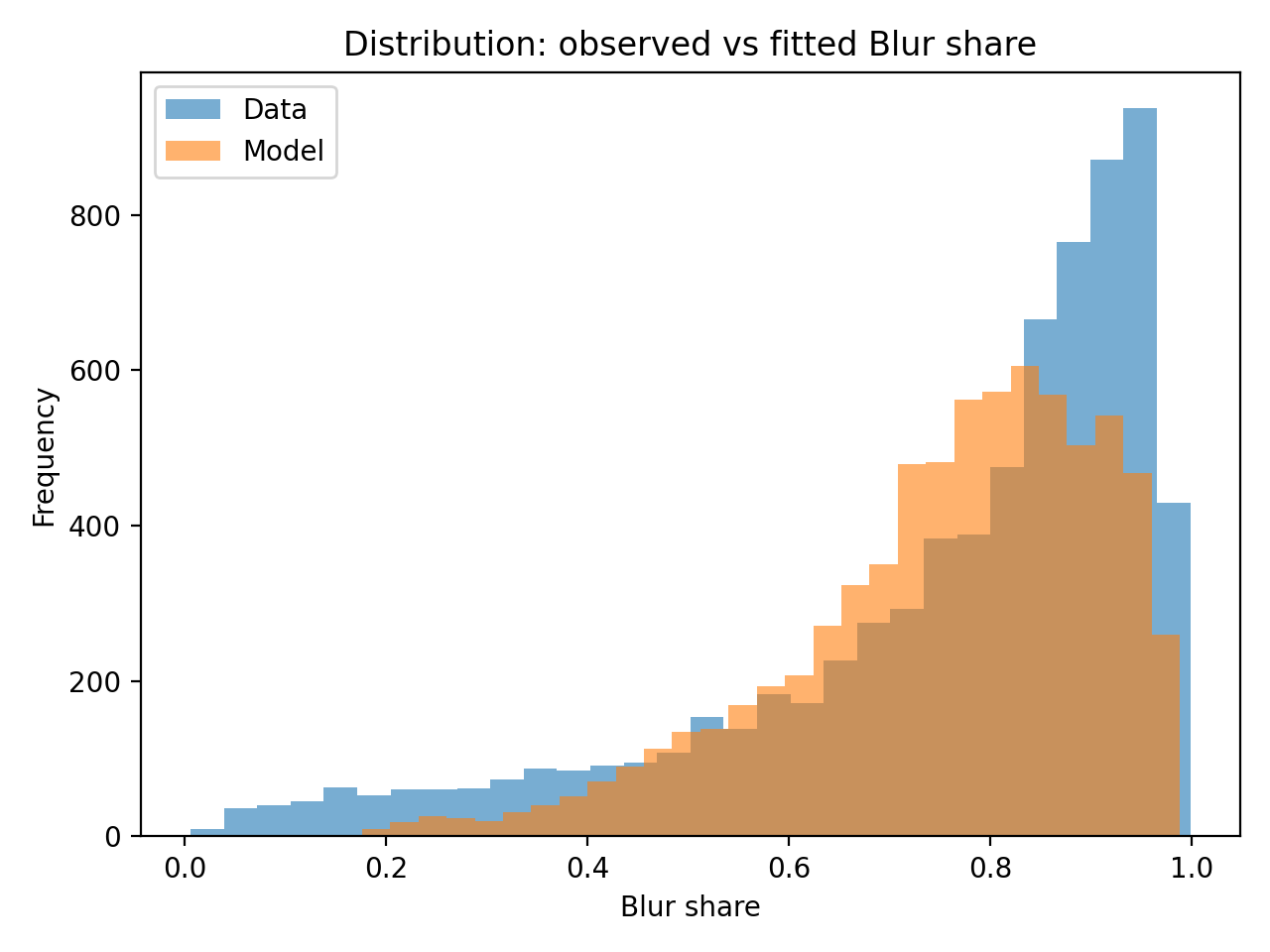
Economics Honors Thesis (WRS), 2026.This paper studies how royalty enforcement policies adopted by NFT marketplaces shape platform competition, trader routing behavior, and creator revenues. Motivated by the recent divergence between marketplaces that impose mandatory royalties and those that offer optional or weak enforcement of royalties for creators, this paper develops a new three-period theoretical model with a single creator, a continuum of heterogeneous traders, and competing platforms which can choose their enforcement credibility. The model nests mandatory, optional, and zero-royalty regimes and incorporates switching costs away from a collections minting platform. Through several analytical cases, including monopoly, symmetric duopoly, trader information and motive differences, and differing regime standoffs, the paper shows how enforcement choices interact with routing incentives. In environments dominated by speculators or with low switching frictions, platforms face downward pressures to zero enforcement credibility. When collectors or positive switching costs are sufficiently important, interior non-zero enforcement equilibria or asymmetric outcomes are shown to exist. Using Ethereum NFT trade-level data from 2022-2024, the paper additionally constructs empirical measures of royalty enforcement credibility, effective trading costs, and switching frictions. Using an estimated structural model, trader cost-sensitivity, collector valuation of enforcement, share of speculators in trading population, and price-dependent switching costs are found. Using the structural model, the paper shows that under changes to optional and mandatory regime enforcement, strengthening or weakening optional royalty compliance, and reducing switching frictions, key equilibrium changes to market share emerge.
NFT-Enforcement
Economics Honors Thesis (WRS), 2026.This paper studies how royalty enforcement policies adopted by NFT marketplaces shape platform competition, trader routing behavior, and creator revenues. Motivated by the recent divergence between marketplaces that impose mandatory royalties and those that offer optional or weak enforcement of royalties for creators, this paper develops a new three-period theoretical model with a single creator, a continuum of heterogeneous traders, and competing platforms which can choose their enforcement credibility. The model nests mandatory, optional, and zero-royalty regimes and incorporates switching costs away from a collections minting platform. Through several analytical cases, including monopoly, symmetric duopoly, trader information and motive differences, and differing regime standoffs, the paper shows how enforcement choices interact with routing incentives. In environments dominated by speculators or with low switching frictions, platforms face downward pressures to zero enforcement credibility. When collectors or positive switching costs are sufficiently important, interior non-zero enforcement equilibria or asymmetric outcomes are shown to exist. Using Ethereum NFT trade-level data from 2022-2024, the paper additionally constructs empirical measures of royalty enforcement credibility, effective trading costs, and switching frictions. Using an estimated structural model, trader cost-sensitivity, collector valuation of enforcement, share of speculators in trading population, and price-dependent switching costs are found. Using the structural model, the paper shows that under changes to optional and mandatory regime enforcement, strengthening or weakening optional royalty compliance, and reducing switching frictions, key equilibrium changes to market share emerge. -
 BN-DBN BNPL
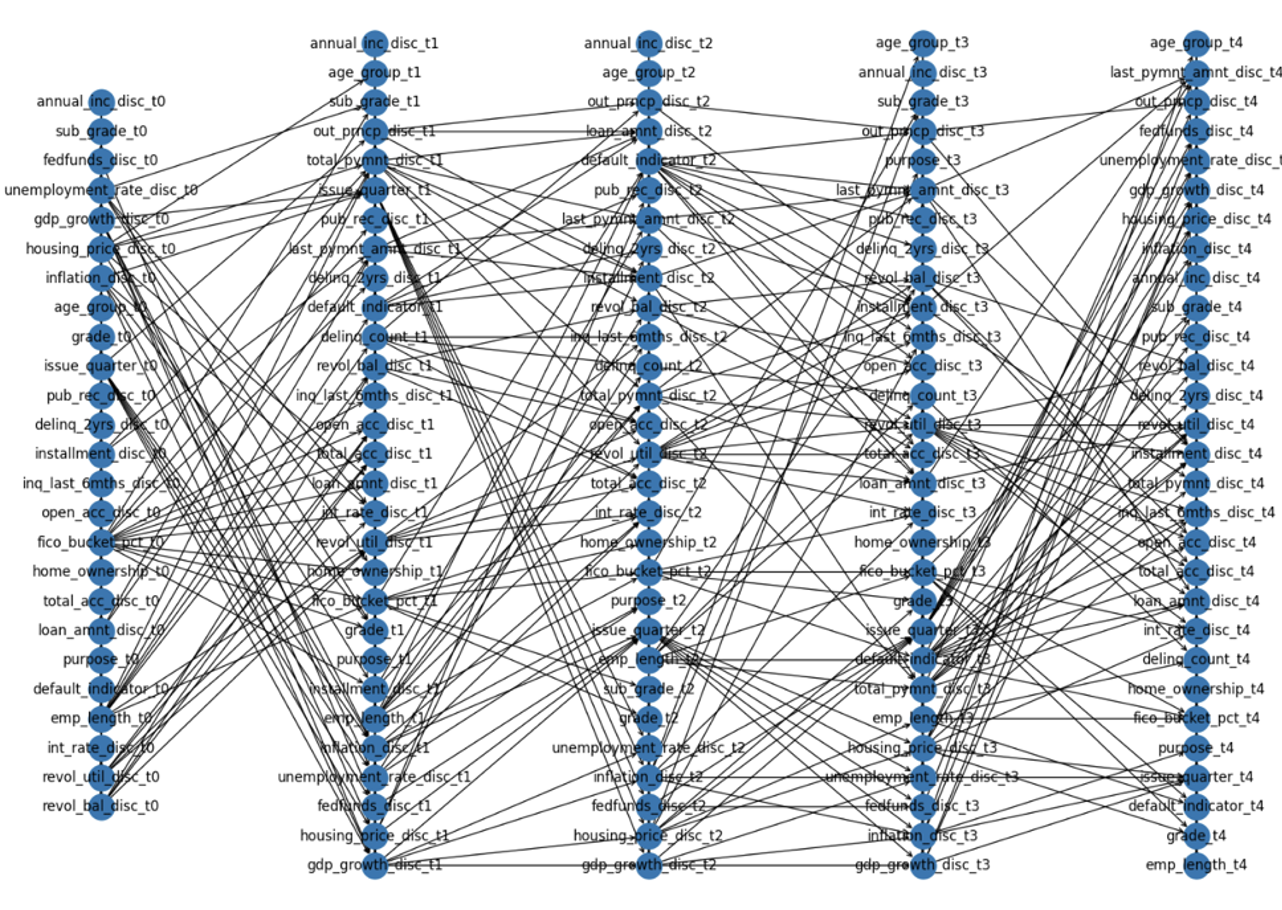
Final Thesis - Wharton Research Scholars (WRS), 2025.This paper investigates the application of Bayesian Networks (BNs) and Dynamic Bayesian Networks (DBNs) on personalized credit risk assessment in the Buy Now, Pay Later (BNPL) industry. Using data from the Lending Club as a proxy for BNPL loans, the paper constructs multiple static and 5-period temporal network structures by discretizing borrower, loan, and macroeconomic characteristics. The use of score-based structure-learning methods allows for the identification of optimal network structures. A cost-sensitive bootstrap evaluation assesses model performance across multiple classification metrics. Results show that naive BNs offer high interpretability, BNs with learned structures capture important inter-dependencies in the data, and DBNs provide improved temporal inference, all while remaining computationally efficient for real-time decision making for a BNPL context. The findings suggest that using these models can serve effectively as a secondary check for default prediction flexible to the needs of the lender, balancing risk and operational constraints in short-term lending.
BN-DBN BNPL
Final Thesis - Wharton Research Scholars (WRS), 2025.This paper investigates the application of Bayesian Networks (BNs) and Dynamic Bayesian Networks (DBNs) on personalized credit risk assessment in the Buy Now, Pay Later (BNPL) industry. Using data from the Lending Club as a proxy for BNPL loans, the paper constructs multiple static and 5-period temporal network structures by discretizing borrower, loan, and macroeconomic characteristics. The use of score-based structure-learning methods allows for the identification of optimal network structures. A cost-sensitive bootstrap evaluation assesses model performance across multiple classification metrics. Results show that naive BNs offer high interpretability, BNs with learned structures capture important inter-dependencies in the data, and DBNs provide improved temporal inference, all while remaining computationally efficient for real-time decision making for a BNPL context. The findings suggest that using these models can serve effectively as a secondary check for default prediction flexible to the needs of the lender, balancing risk and operational constraints in short-term lending. -
 CPT-MARL
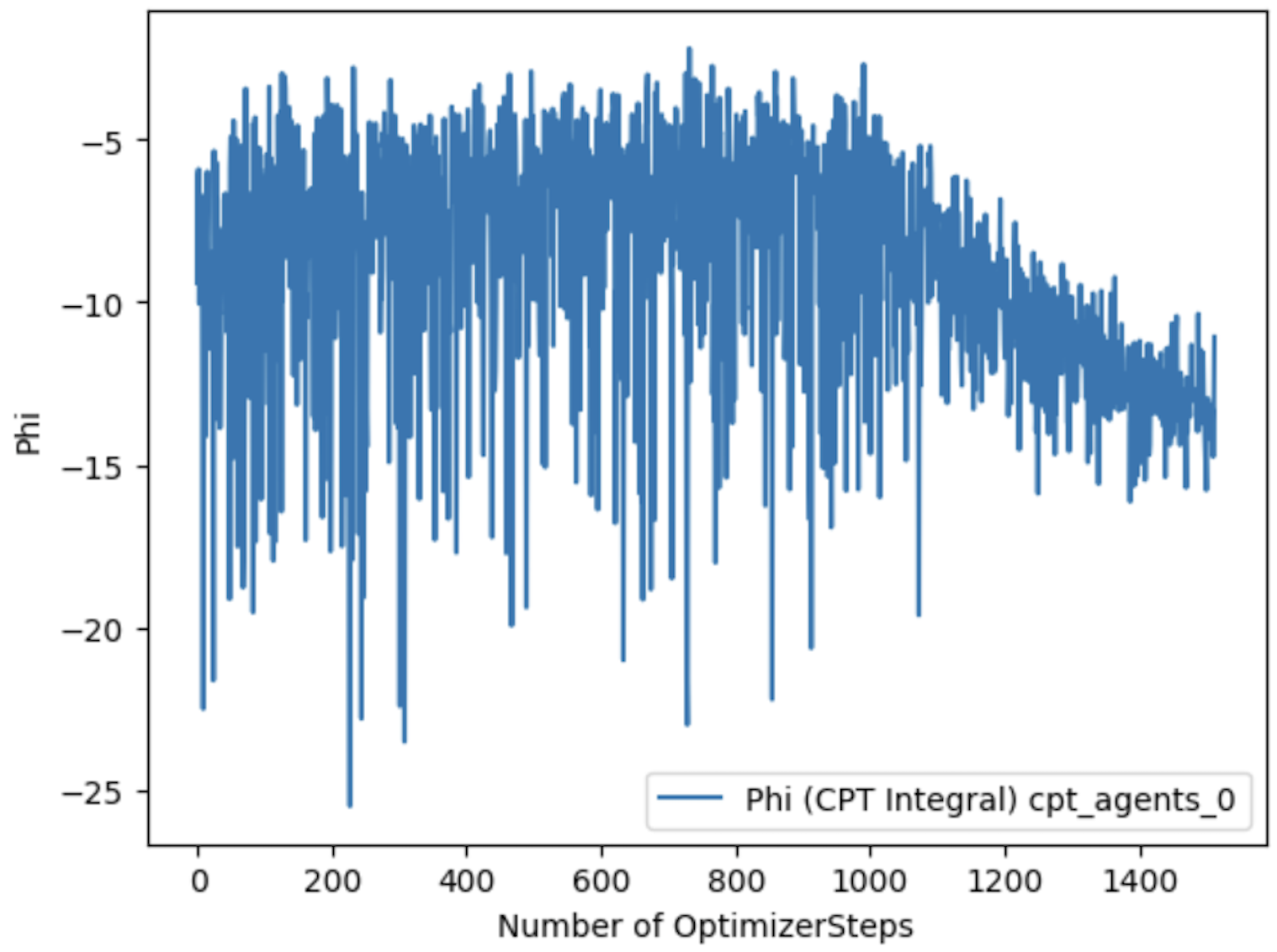
MAS Workshop of the 42nd International Conference on Machine Learning (ICML 2025)We apply CPT-MADDPG, a novel extension of the Multi-Agent Deep Deterministic Policy Gradient algorithm that embeds full Cumulative Prospect Theory (CPT) value and probability-weighting transforms into both critic and actor updates. By replacing expected-return maximization with rank-dependent Choquet integrals over gains and losses, CPT-MADDPG endows agents with tunable risk profiles—ranging from exploratory, risk-seeking behaviors to conservative, loss-averse ones—without human intervention. We further propose two extensions- an observability adjustment, which aggregates cross-agent subjective utilities in the Bellman backup when agents share CPT parameters; and adaptive behavioral parameters, where CPT hyperparameters are learned online via a secondary loss. Across competitive pursuit (Simple Tag), cooperative coverage (Simple Spread), and strategic bidding (first-price auctions), we show that risk-seeking parameterized CPT speeds early learning, extreme risk-averse parameterized CPT enforces prudence at a performance cost, transparent utility sharing preserves coordination under heterogeneity, and naive dynamic adaptation destabilizes convergence. In auction settings, learned CPT policies replicate the overbidding phenomenon documented by Josheski and Delcev, yielding short-term gains followed by long-term losses. Our work demonstrates a principled, differentiable framework for integrating human-like risk attitudes into multi-agent RL.
CPT-MARL
MAS Workshop of the 42nd International Conference on Machine Learning (ICML 2025)We apply CPT-MADDPG, a novel extension of the Multi-Agent Deep Deterministic Policy Gradient algorithm that embeds full Cumulative Prospect Theory (CPT) value and probability-weighting transforms into both critic and actor updates. By replacing expected-return maximization with rank-dependent Choquet integrals over gains and losses, CPT-MADDPG endows agents with tunable risk profiles—ranging from exploratory, risk-seeking behaviors to conservative, loss-averse ones—without human intervention. We further propose two extensions- an observability adjustment, which aggregates cross-agent subjective utilities in the Bellman backup when agents share CPT parameters; and adaptive behavioral parameters, where CPT hyperparameters are learned online via a secondary loss. Across competitive pursuit (Simple Tag), cooperative coverage (Simple Spread), and strategic bidding (first-price auctions), we show that risk-seeking parameterized CPT speeds early learning, extreme risk-averse parameterized CPT enforces prudence at a performance cost, transparent utility sharing preserves coordination under heterogeneity, and naive dynamic adaptation destabilizes convergence. In auction settings, learned CPT policies replicate the overbidding phenomenon documented by Josheski and Delcev, yielding short-term gains followed by long-term losses. Our work demonstrates a principled, differentiable framework for integrating human-like risk attitudes into multi-agent RL. -
 CI-INTF
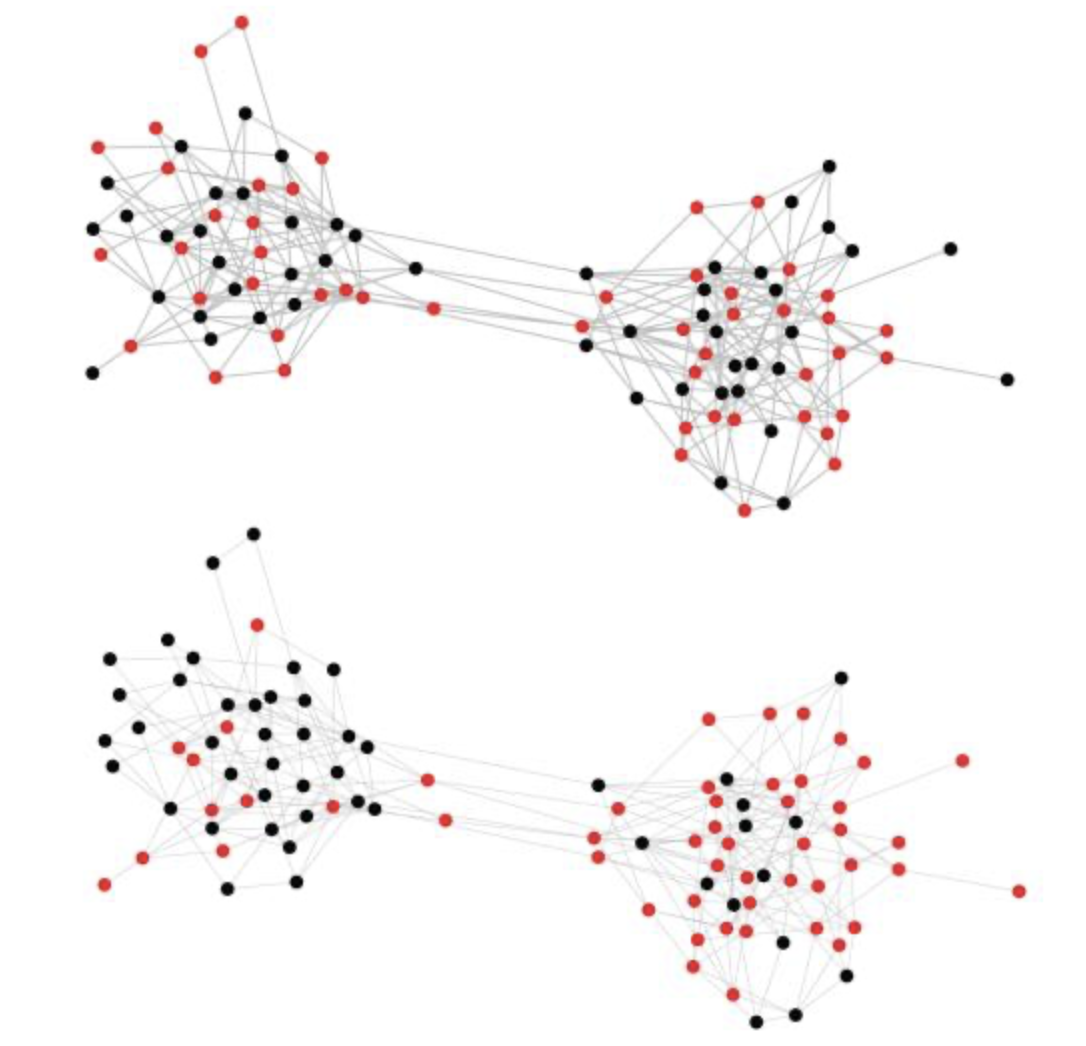
Wharton Directed Reading Program (WDRP), 2025.PDF Project Page Oral PresentationIn this presentation, we explore how causal studies often assume each person’s treatment only affects themselves, and what happens when that assumption fails and treatments spill over to others. We begin by reviewing the four core rules to conduct causal inference and show how real-world interactions break these rules. Next, we discuss simple modeling methods to correct for spillover bias and illustrate how social network features like homophily and contagion can make treatment effects appear stronger than they truly are. We then introduce intuitive graph‑based representations, such as temporal DAGs and chain graphs, and present a practical two‑step approach to using these representations that remains effective even when the full network connections aren’t known. Through this presentation, you’ll understand why accounting for interference in causal inference is crucial and have clear tools to adjust your analyses so you draw accurate conclusions.
CI-INTF
Wharton Directed Reading Program (WDRP), 2025.PDF Project Page Oral PresentationIn this presentation, we explore how causal studies often assume each person’s treatment only affects themselves, and what happens when that assumption fails and treatments spill over to others. We begin by reviewing the four core rules to conduct causal inference and show how real-world interactions break these rules. Next, we discuss simple modeling methods to correct for spillover bias and illustrate how social network features like homophily and contagion can make treatment effects appear stronger than they truly are. We then introduce intuitive graph‑based representations, such as temporal DAGs and chain graphs, and present a practical two‑step approach to using these representations that remains effective even when the full network connections aren’t known. Through this presentation, you’ll understand why accounting for interference in causal inference is crucial and have clear tools to adjust your analyses so you draw accurate conclusions. -
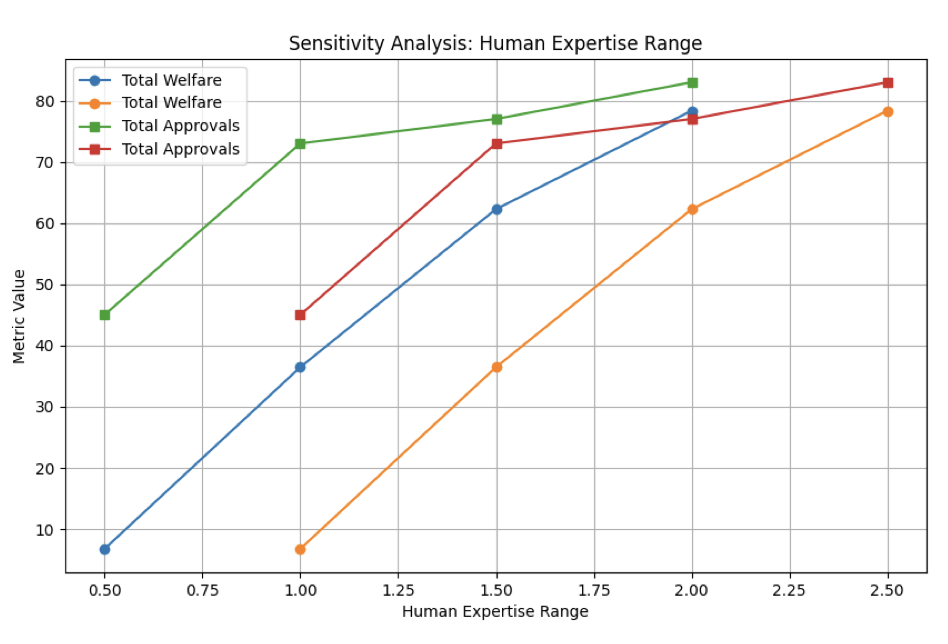 HUM-AI-WELF
The integration of artificial intelligence (AI) into economic systems represents a transformative shift in decision-making frameworks, introducing novel dynamics between human and AI agents. This paper proposes a welfare model that incorporates both game-theoretic and behavioral dimensions to optimize interactions within human-AI ecosystems. By leveraging agent-based modeling (ABM), we simulate these interactions, accounting for trust evolution, perceived risks, and cognitive costs. The framework redefines welfare as the aggregate utility of interactions, adjusted for collaboration synergies, efficiency penalties, and equity considerations. Dynamic trust is modeled using Bayesian updating mechanisms, while synergies between agents are quantified through a collaboration index rooted in cooperative game theory. Results reveal that trust-building and skill development are pivotal to maximizing welfare, while sensitivity analyses highlight the trade-offs between AI complexity, equity, and efficiency. This research provides actionable insights for policymakers and system designers, emphasizing the importance of equitable AI adoption and fostering sustainable human-AI collaborations.
HUM-AI-WELF
The integration of artificial intelligence (AI) into economic systems represents a transformative shift in decision-making frameworks, introducing novel dynamics between human and AI agents. This paper proposes a welfare model that incorporates both game-theoretic and behavioral dimensions to optimize interactions within human-AI ecosystems. By leveraging agent-based modeling (ABM), we simulate these interactions, accounting for trust evolution, perceived risks, and cognitive costs. The framework redefines welfare as the aggregate utility of interactions, adjusted for collaboration synergies, efficiency penalties, and equity considerations. Dynamic trust is modeled using Bayesian updating mechanisms, while synergies between agents are quantified through a collaboration index rooted in cooperative game theory. Results reveal that trust-building and skill development are pivotal to maximizing welfare, while sensitivity analyses highlight the trade-offs between AI complexity, equity, and efficiency. This research provides actionable insights for policymakers and system designers, emphasizing the importance of equitable AI adoption and fostering sustainable human-AI collaborations. -
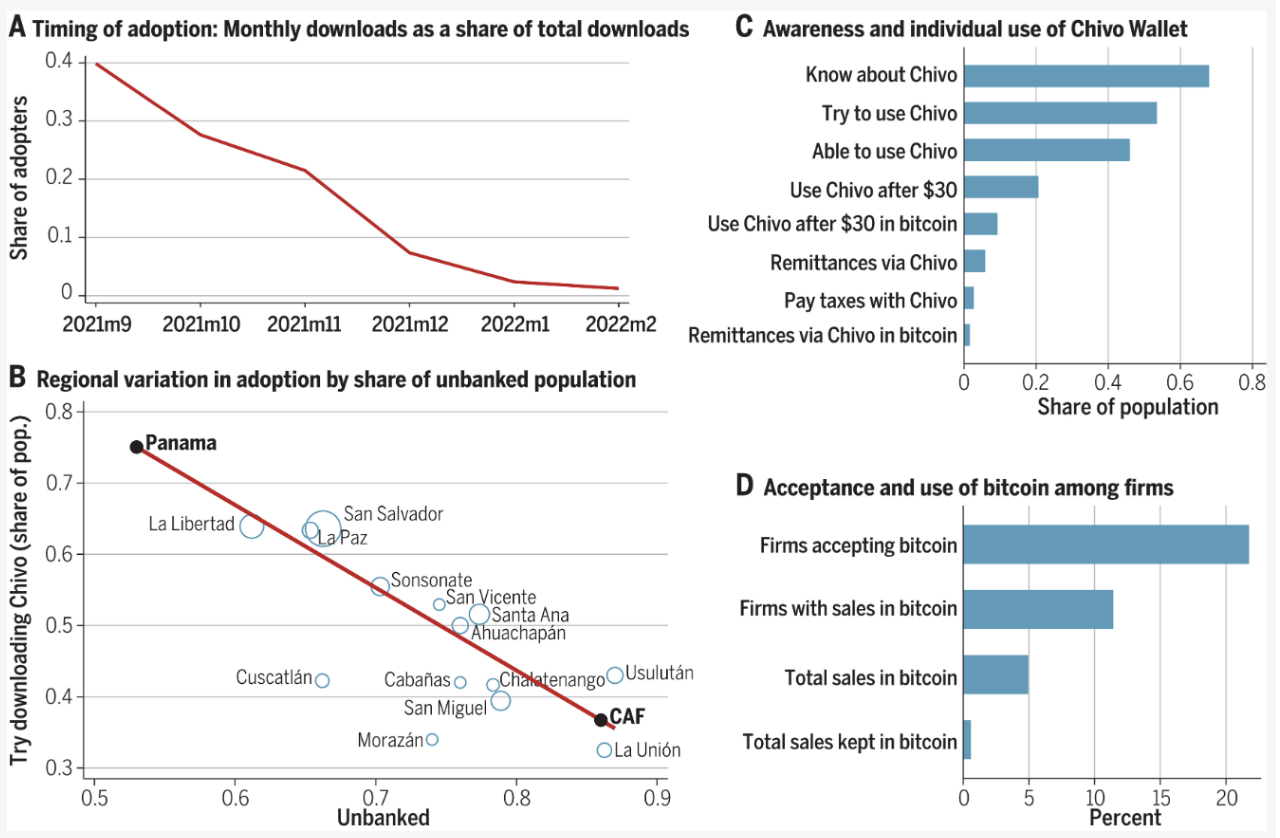 GRC-CRYPTO-DEV
Economic Development Series - Wharton Global Research and Consulting (GRC), 2024.This paper examines the role of digital currencies in fostering financial inclusion and economic development, particularly in developing economies. Through an analysis of various digital currency forms—cryptocurrencies, Central Bank Digital Currencies (CBDCs), stablecoins, and utility tokens—the study evaluates their potential to streamline financial transactions, reduce costs, and offer secure financial services to marginalized communities. The integration of these technologies in developing regions is facilitated by the rapid digitization of financial services and the widespread adoption of mobile technology, making digital currencies a viable alternative to traditional financial systems. The paper highlights the economic benefits of digital currencies, such as enhanced business operations, international investment attraction, and stimulation of domestic economic growth across crucial sectors. Socially, digital currencies promise greater equity in financial access, potentially serving as catalysts for social and economic advancement, particularly for those in lower-income or marginalized regions. However, the success of digital currencies in achieving these outcomes is contingent upon robust infrastructure, effective regulatory frameworks, and strategic implementation to prevent exacerbating existing inequalities. The conclusion underscores a mixed potential impact on financial inclusion, indicating that while digital currencies offer significant opportunities for socio-economic development, their effectiveness is heavily dependent on addressing infrastructural and governance challenges. Future strategies should focus on ensuring that digital currency adoption aligns with broader economic and social goals to fully harness their transformative potential.
GRC-CRYPTO-DEV
Economic Development Series - Wharton Global Research and Consulting (GRC), 2024.This paper examines the role of digital currencies in fostering financial inclusion and economic development, particularly in developing economies. Through an analysis of various digital currency forms—cryptocurrencies, Central Bank Digital Currencies (CBDCs), stablecoins, and utility tokens—the study evaluates their potential to streamline financial transactions, reduce costs, and offer secure financial services to marginalized communities. The integration of these technologies in developing regions is facilitated by the rapid digitization of financial services and the widespread adoption of mobile technology, making digital currencies a viable alternative to traditional financial systems. The paper highlights the economic benefits of digital currencies, such as enhanced business operations, international investment attraction, and stimulation of domestic economic growth across crucial sectors. Socially, digital currencies promise greater equity in financial access, potentially serving as catalysts for social and economic advancement, particularly for those in lower-income or marginalized regions. However, the success of digital currencies in achieving these outcomes is contingent upon robust infrastructure, effective regulatory frameworks, and strategic implementation to prevent exacerbating existing inequalities. The conclusion underscores a mixed potential impact on financial inclusion, indicating that while digital currencies offer significant opportunities for socio-economic development, their effectiveness is heavily dependent on addressing infrastructural and governance challenges. Future strategies should focus on ensuring that digital currency adoption aligns with broader economic and social goals to fully harness their transformative potential. -
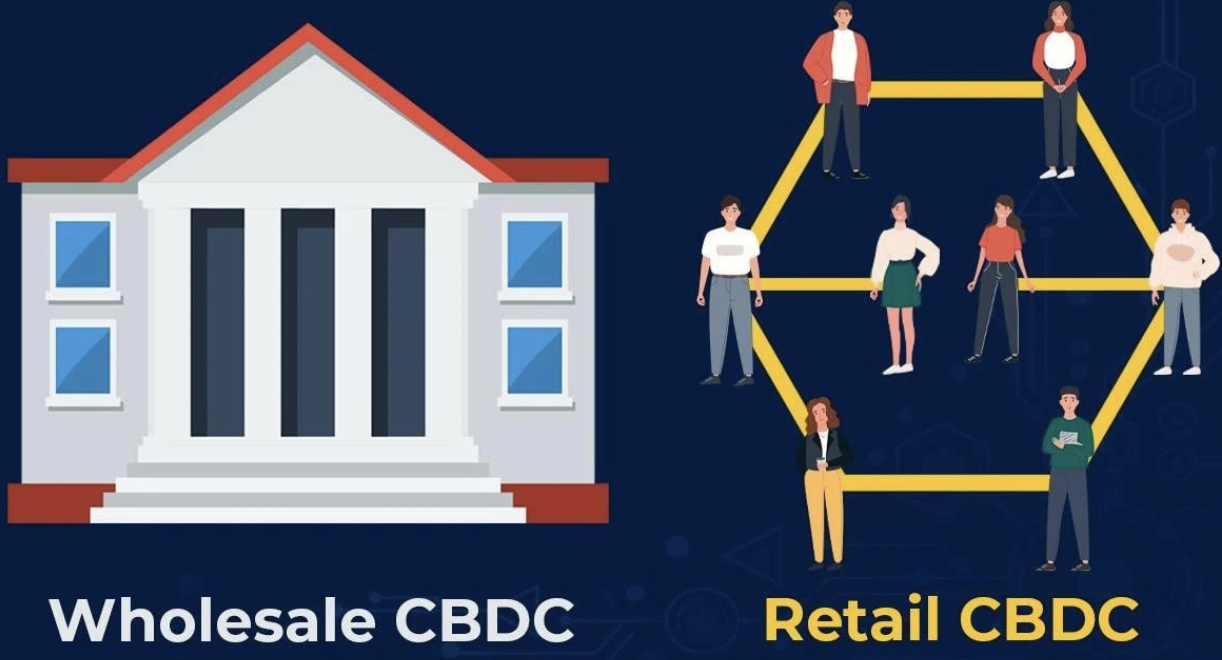 HUEA
Harvard Undergraduate Economics Association - International Economics Essay Competition (Top 20 Placement), 2022My submission to the Harvard University International Economics Essay Contest for the following prompt where it placed within the top 20 of all entries worldwide. “The rise of central bank digital currencies (CBDCs), in addition to existing forms of decentralized cryptocurrencies, could eventually shape the way global finance is conducted through technology. This spells significant economic and political repercussions, especially as non-US countries such as China implement CBDCs to varying extents. In light of these developments, how should the Federal Reserve, European Central Bank, or other institutions and governments proceed with the development of CBDCs in their respective economies?”
HUEA
Harvard Undergraduate Economics Association - International Economics Essay Competition (Top 20 Placement), 2022My submission to the Harvard University International Economics Essay Contest for the following prompt where it placed within the top 20 of all entries worldwide. “The rise of central bank digital currencies (CBDCs), in addition to existing forms of decentralized cryptocurrencies, could eventually shape the way global finance is conducted through technology. This spells significant economic and political repercussions, especially as non-US countries such as China implement CBDCs to varying extents. In light of these developments, how should the Federal Reserve, European Central Bank, or other institutions and governments proceed with the development of CBDCs in their respective economies?”
Powered by Jekyll and Minimal Light theme.